
Who We Are
The Fusion Impacts Collaborative is built on a belief that fusion energy’s scientific promise is only half the challenge. The environmental, societal, and policy work is folded into every part of our research.
Built on a Legacy of Scientific Courage
For over 60 years, the University of Wisconsin–Madison has pursued excellence in fusion energy research, but one researcher helped make UW–Madison a standout for fusion discoveries.
Donald Kerst earned his bachelor’s and doctoral degrees at UW–Madison, then went on to invent the betatron — the first particle accelerator to successfully accelerate electrons using electromagnetic induction. He later turned his attention entirely to plasma physics and the control of fusion reactions, returning to Madison as a professor in 1962 and spending the rest of his career working on the fundamental challenge of magnetic plasma confinement.
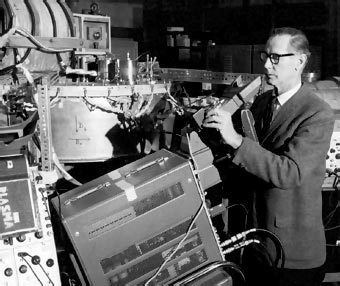
Donald W. Kerst, UW–Madison BA 1934, PhD 1937
Inventor of the betatron and pioneer of plasma confinement. Kerst joined UW–Madison’s faculty in 1962 and spent nearly two decades advancing the science of magnetic fusion — laying the groundwork for every experiment on campus today.
Kerst and collaborator Tihiro Ohkawa invented toroidal devices for containing plasma with magnetic fields — the first to contain plasma without the instabilities that had plagued every previous design, and the first to hold plasma beyond the Bohm diffusion limit. That breakthrough laid the foundation for the tokamak and stellarator research that UW–Madison continues to lead today.
The Fusion Impacts Collaborative builds on sixty years of that tradition — not by repeating the past, but by asking the next generation of questions: not just how do we make fusion work, but how do we deploy it responsibly, equitably, and with the trust of the communities it will serve.
“As fusion moves out of the lab and toward the goal of providing clean energy to communities, it requires an interdisciplinary approach.”
— Steffi Diem, UW–Madison Assistant Professor of Nuclear Engineering & Engineering Physics
Where Innovation Meets Responsibility
Our work is rooted in solving the real challenges that stand between fusion science and fusion deployment. By integrating expertise from engineering, social science, and public policy, we are developing the evidence base, safety infrastructure, and public trust that responsible commercialization demands.
Activation Analysis
When reactor materials are exposed to intense radiation (a process called irradiation), they can become radioactive themselves, changing in ways that must be carefully measured and understood. We are developing activation analysis capabilities to give researchers and industry the precise material characterization data they need to deploy fusion energy safely and at commercial scale.
Fuel Cycle Analysis
Understanding the fusion fuel cycle critically affects worker and public safety, commercial performance, and environmental impacts. Ensuring the reliable, continuous operation of fusion energy plants requires thorough fuel cycle analysis — especially fuel handling technologies and waste disposal for radioactive tritium.
Fusion Impacts
Fusion energy facilities and the fuel cycle will have a broad range of impacts — from providing energy to a variety of sectors to impacts from resource extraction to decommissioning. We are investigating not only those widespread impacts, but also the scalability of fusion energy systems.
Public Engagement & Risk Communication
Meaningful fusion energy commercialization requires input from many voices. That’s why we are engaging a broad range of groups across Wisconsin to understand the many facets of this transition — prioritizing trust and transparency as we design, establish, and deploy future fusion energy systems.
Risk and Safety Assessment
The fusion industry is rapidly emerging and pursuing a variety of new technology design concepts. We are working to update prior safety studies and to develop a risk-informed licensing framework.
Meet Our Leadership Team

Stephanie (Steffi) Diem
PRINCIPAL INVESTIGATOR & COLLABORATIon LEAD
Assistant Professor, Nuclear Engineering & Engineering Physics
U.S. Science Envoy for Fusion Energy (2024–25)
Research focus areas: Experimental plasma physics, Pegasus-III experiment, energy equity, public engagement
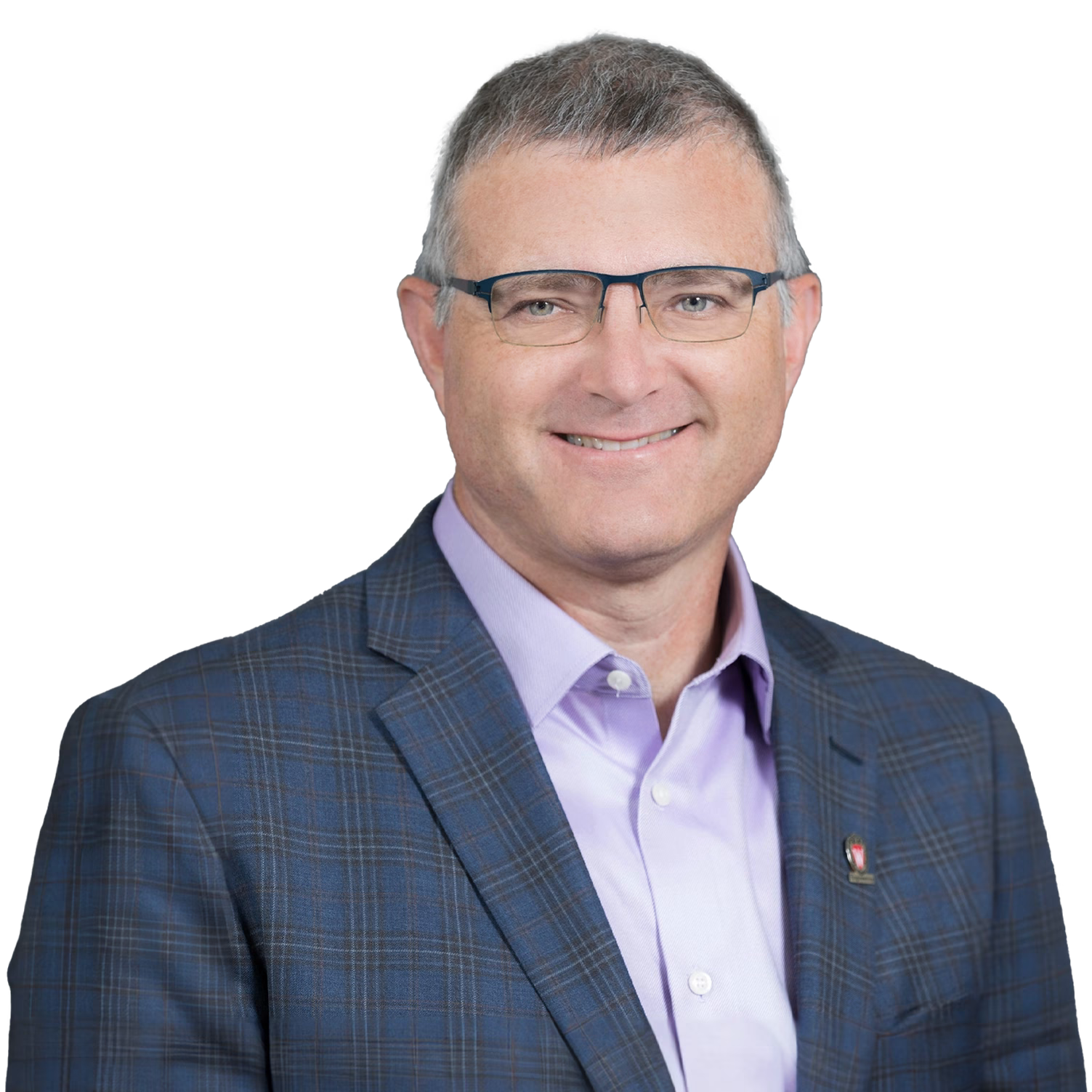
Paul Wilson
Research Lead — activation analysis
Professor and Department Chair, Nuclear Engineering & Engineering Physics
Research focus areas: Software simulation and analysis tools for fusion neutronics, fusion activation, induced radioactivity of fusion materials

Ben Lindley
Research Lead — fuel cycle analysis
Assistant Professor, Nuclear Engineering & Engineering Physics and Argonne National Laboratory
Co-founder, Realta Fusion
Research focus areas: Reactor physics, fission reactor and fusion energy system design, integrated energy systems, materials management in the fusion energy ecosystem, materials lifecycle analysis

Morgan Edwards
Research Lead — fusion impacts
Assistant Professor, La Follette School of Public Affairs
Research focus areas: Human-centered energy policy, Natural gas systems, coal phase-out, negative emissions technologies, energy equity, mixed methods research

Kaiping Chen
Research Lead — Public Engagement & Risk Communication
Associate Professor, Computational Communication
Research focus areas: Equity in science and technology communication, public engagement with fusion, social impacts of emerging technologies

Juliana Pacheco Duarte
Research Lead — Risk & Safety Assessment
Associate Professor, Nuclear Engineering & Engineering Physics
Research focus areas: Safety and risk analysis of advanced nuclear systems and fusion machines, two-phase heat transfer, computational thermal-hydraulic analysis and system codes
Fusion Impacts Collaborative
A cross-disciplinary research initiative at the University of Wisconsin–Madison focused on the responsible development and deployment of fusion energy.